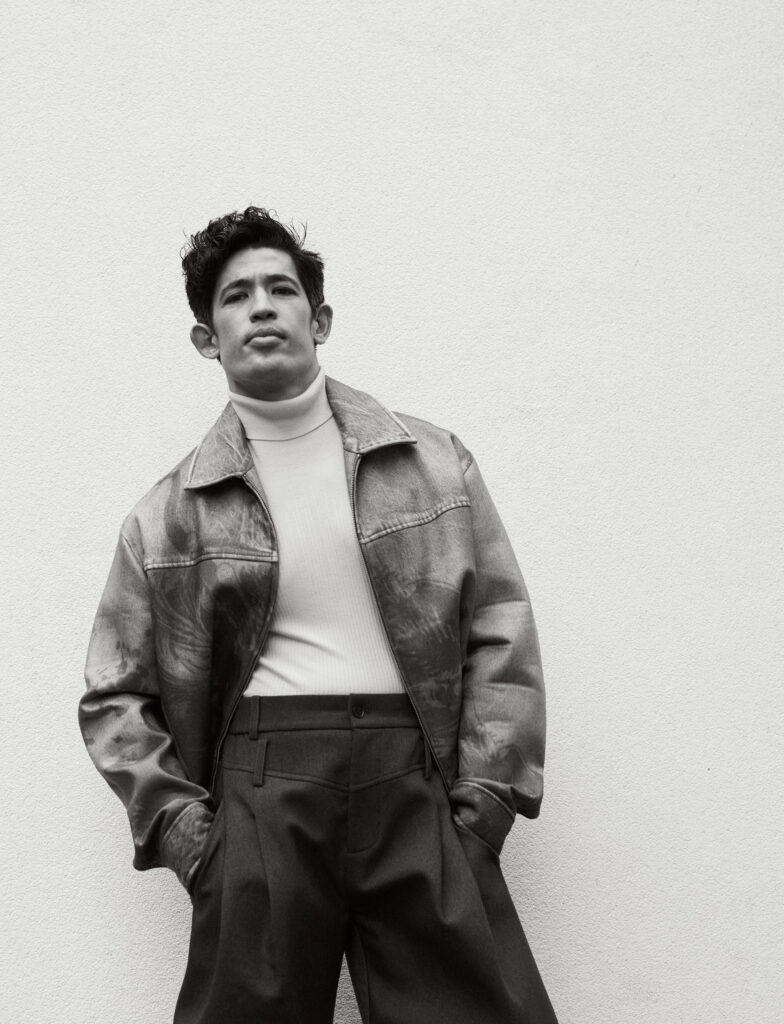
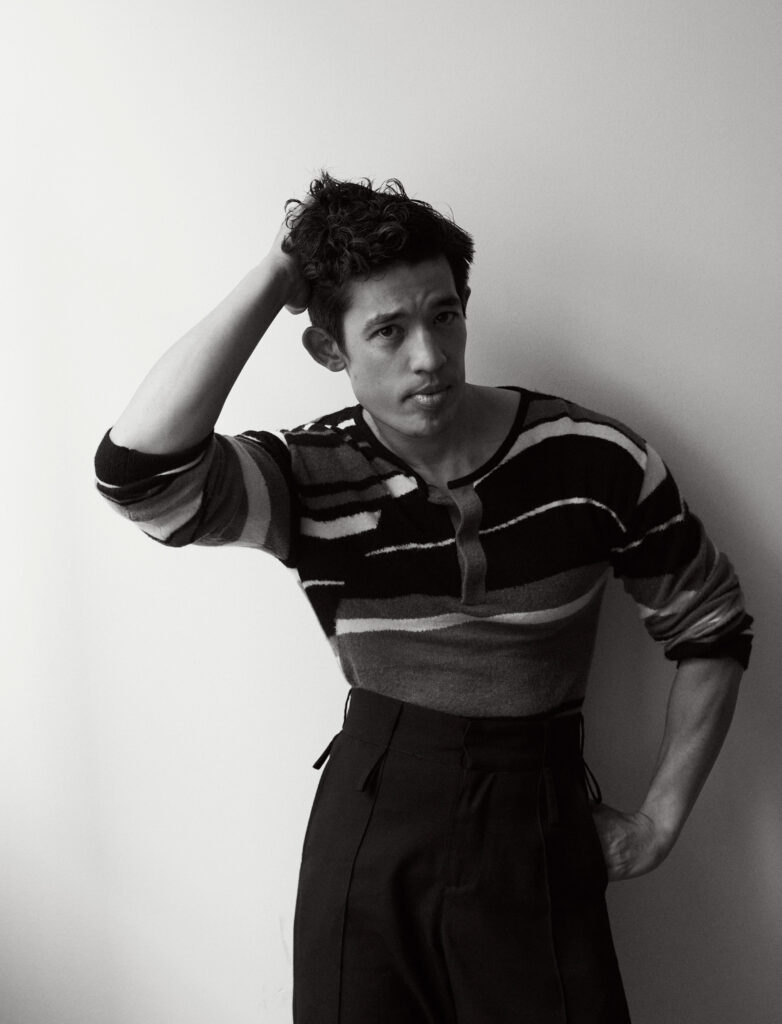
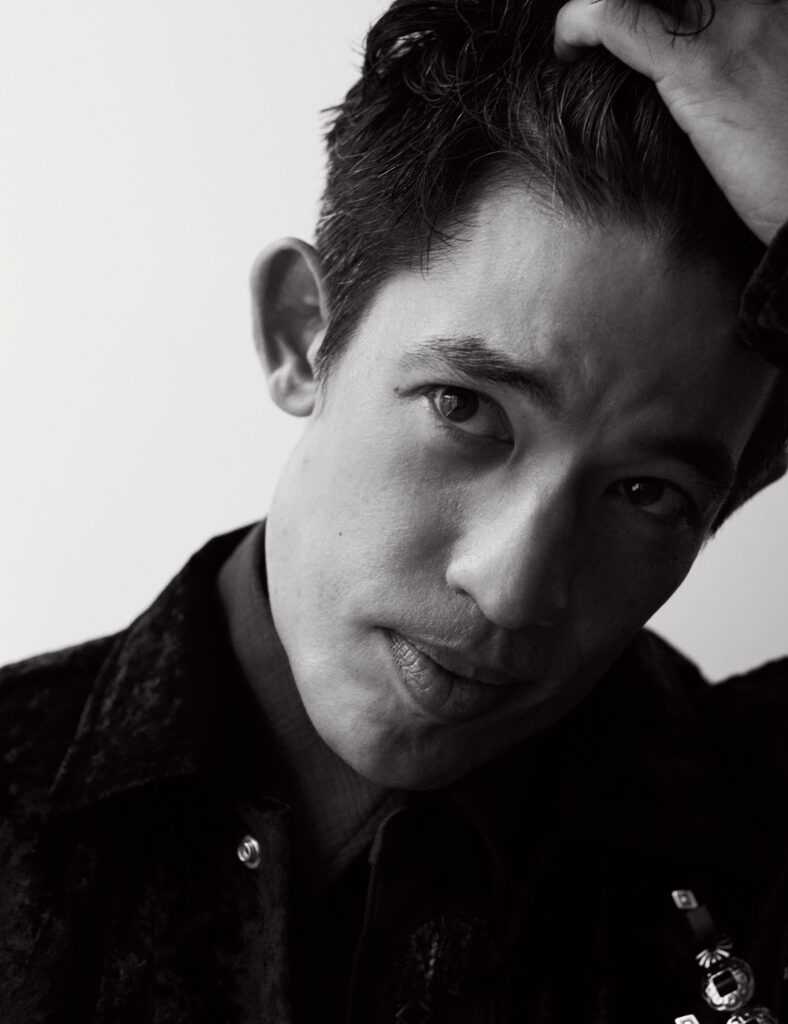
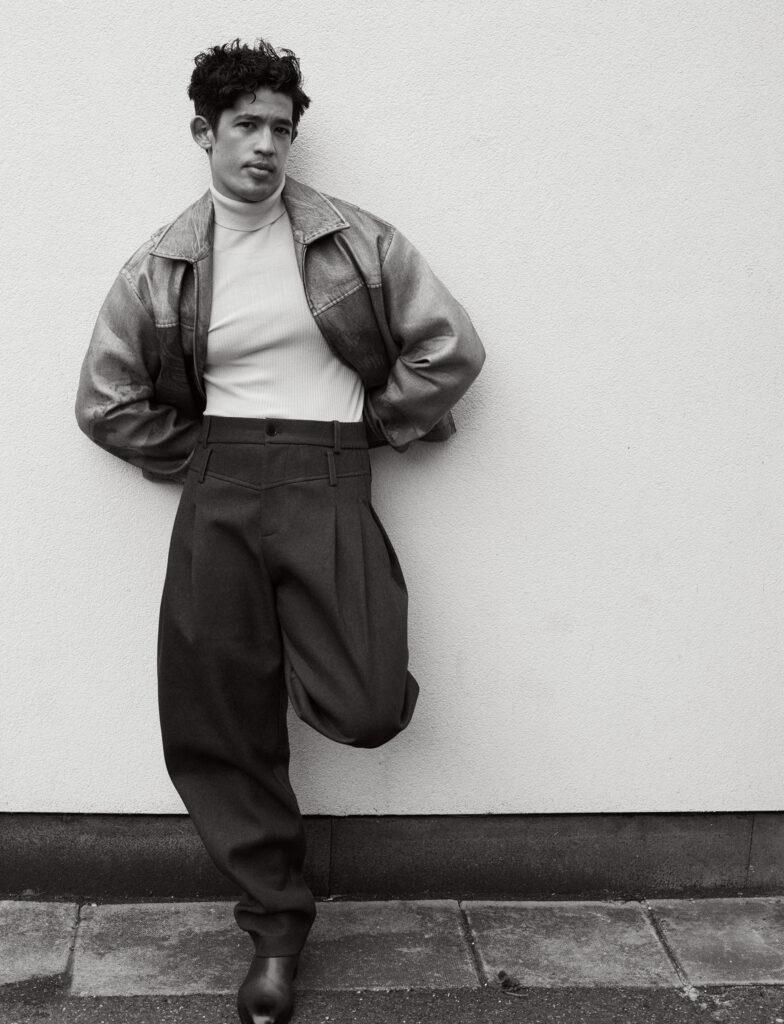
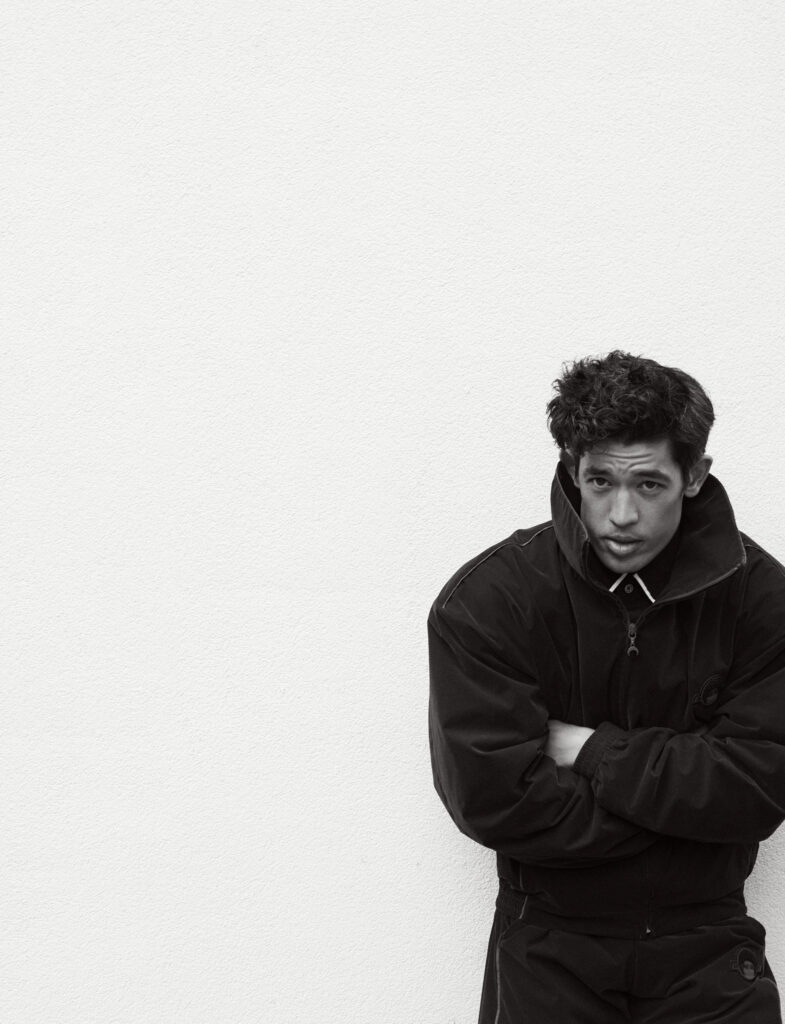
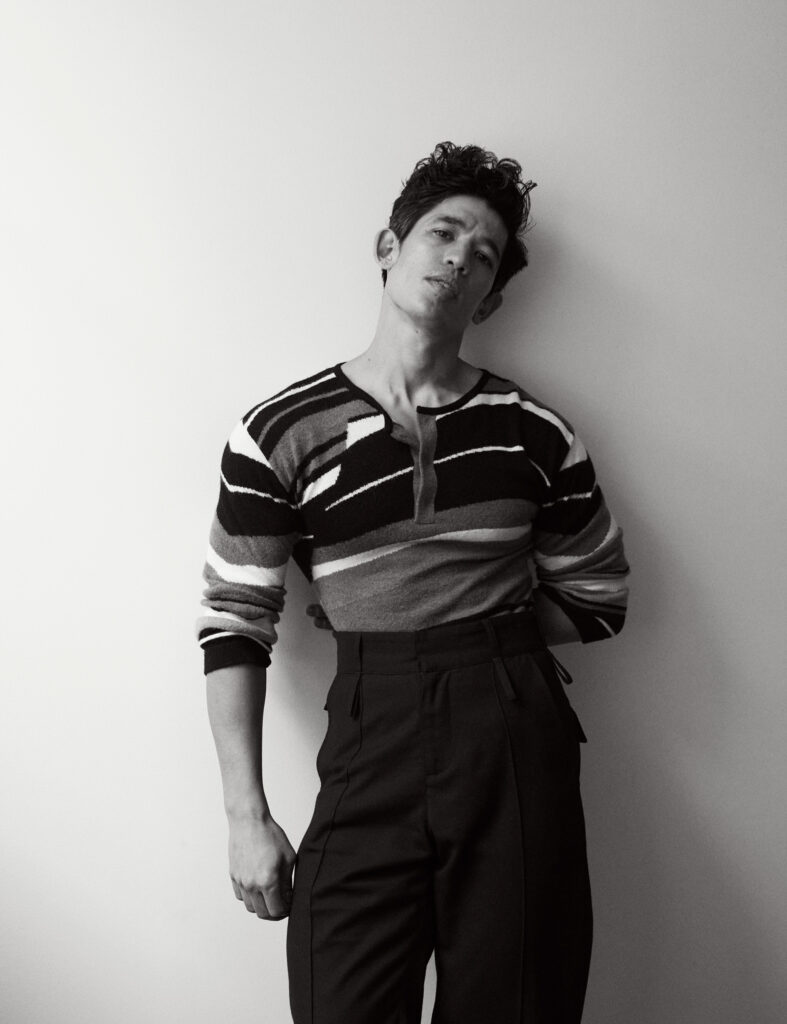
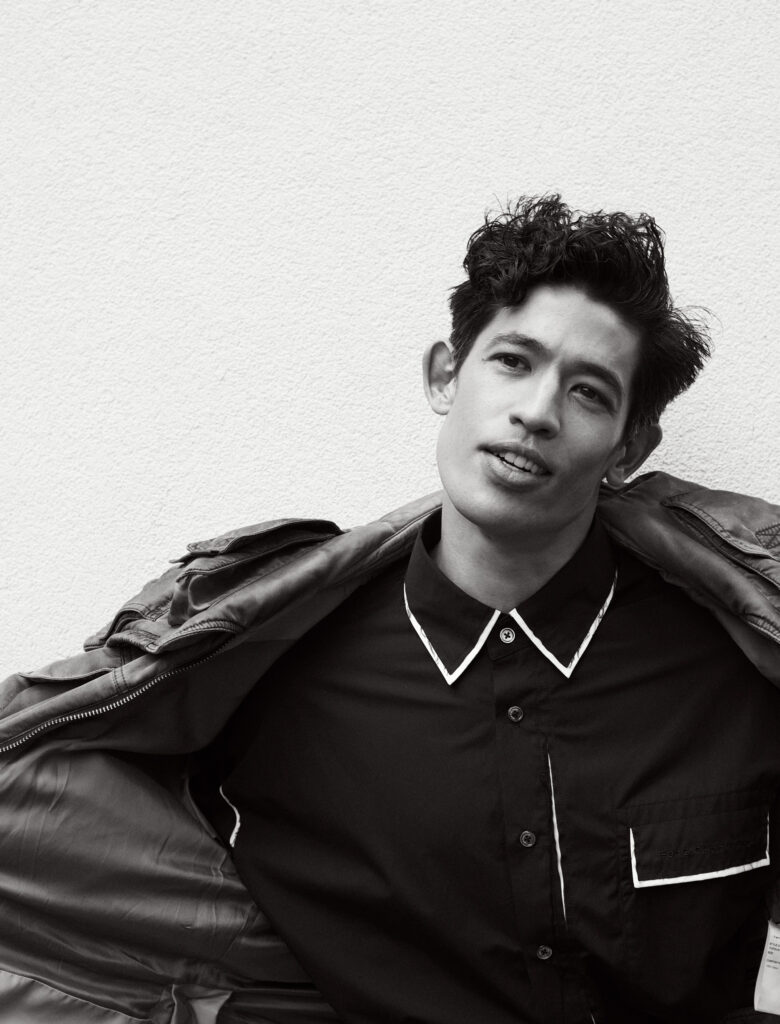
As Slow Horses Season 5 wraps, BAFTA-nominated actor Christopher Chung takes on a defining moment in his journey as Roddy Ho, the series’ sharp-tongued tech prodigy and unlikely emotional anchor. Once seen mainly as comic relief, Roddy now stands at the heart of the show’s rhythm — a character whose confidence, chaos, and hidden vulnerability capture the essence of Slough House itself.
Chung’s performance, which earned him a BAFTA nomination for Best Supporting Actor in Season 4, deepens in Season 5 as he continues to peel back the layers of a man who masks insecurity with swagger. The result is a portrayal that feels as vital as it is unpredictable — and one that cements Roddy Ho as a central force in Slow Horses’ ongoing evolution.
In conversation with ContentsMan, Christopher reflects on Roddy’s growth, the dynamics behind his performance, and what it means to step into the spotlight in one of British television’s most acclaimed ensembles.
As Slow Horses embarks on its fifth season, what moments do you think best encapsulate your character Roddy Ho’s development from his first appearance in Season 1?
From Season 1 onward, Roddy always had swagger and self-importance, but mostly in a defensive posture: he masks his insecurity with brashness. The show in itself leans into the characters’ limited growth potential and their predicament of being relegated to Slough House, which is a sort of purgatory for them. Whilst long-running series tend to have huge self-discovery character running arcs, Slow Horses limits this by showing how much of a standstill the characters are at within the world they live in.
Roddy specifically takes on little of the baggage from previous experiences. His actions are largely governed by his self-inflated sense of self and his skewed view of the world. I have tried to show moments of vulnerability in Roddy, where you see the mask he wears, which is ever-changing season to season, coming down for a split second before he retreats back into his own reality. As the seasons go on, I think you start to get a better sense of Roddy being someone who is trying to find himself within the guises he wears.
Speaking of big or notable moments in the series, what was one of your favorite scenes to film, and why?
For me, the bus crash sequence in Season 3 remains unforgettable. It’s such a brilliant moment of unnecessary storytelling, but completely driven by character. When you combine the chaos of a crash with Roddy trying to assert control, it’s a high-wire moment for him. That sequence was not only brilliantly fun to film but gave me the chance to show some of Roddy’s logic in the face of real danger and juxtapose it with his inability.
I also love filming scenes with Gary Oldman. The moments when Lamb turns on a tilt, and Roddy has to respond, either with calculated assertion or freeze in the moment, create such a fun dynamic to play as an actor. It’s always great fun to try and make your fellow actor corpse in a scene.
When initially cultivating this character, from script to materialization, did you find it helpful to explore the source material—Mick Herron’s Slough House series—and how did you use it (or not)?
Absolutely, I read the books early, largely to understand Roddy’s internal logic, tone, and the way Mick frames his perspective. The novels offer internal monologues and shading that the scripts don’t always explicitly carry. For instance, you learn early on how Roddy rationalizes his arrogance, how his insecurities feed into his commentary. That internal scaffolding gave me texture.
However, I never felt bound to mimic the books slavishly. Some of Roddy’s traits shift in the screen adaptation, so the books became more of an internal compass, a depth reservoir, rather than a strict blueprint. When there’s divergence, I use the spirit of the character in the novels to argue or negotiate choices but always defer to the script and director’s vision.
On the shift in streaming strategy: do you believe the weekly release format (vs. dropping a full season all at once) benefits Slow Horses and its viewing experience?
Yes, I do. Slow Horses thrives on accumulation and tension. The weekly format builds space for audiences to breathe, ponder, and debate. Because the show balances dry humor, character subtleties, and gradual reveals, a week between episodes lets small moments sink in—a glance, a misstep, a joke that lands after you think about it. When episodes drop back-to-back, there’s less time for that resonance.
Also, emotionally, it allows viewers to recalibrate after intense beats. If we finish an episode on a cliffhanger, you’re primed for the next week; your curiosity lingers, and the wait becomes part of the experience rather than a frustration. For a layered ensemble show like this, where the weight isn’t always on big action beats but fragile character shifts, the weekly rhythm suits it.
If you had the opportunity to adapt one book or book series into a television show, what would it be?
I’ve been really fortunate to already be part of book adaptations with Slow Horses and My Brilliant Career, and it’s been exciting to step inside those worlds and see how the material evolves from page to screen. I think the next step for me would be something that leans into questions of identity and belonging. A work like Siang Lu’s Ghost Cities, for instance, fascinates me—its layering of contemporary and ancient storylines, and the way it interrogates cultural and political change, feels like it would translate powerfully to a visual medium. It’s those kinds of narratives, where personal identity is tested against a shifting social landscape, that really excite me.
Slow Horses is known for rotating directors each season. With Saul Metzstein returning (he directed Season 3), what was it like working with him again, and how does his directorial style compare to others you’ve worked with?
Working with Saul again was brilliant. Having worked so closely with him in Season 3, it was nice to be able to enter Season 5 with a deep trust established and a shorthand already in place. He understands the tone and the rhythm of the show and has a strong sense of balance between levity and tension. His direction is intentional: he gives you space within a frame to breathe, to let small reactions land, rather than pushing overt stylization. He trusts actors’ instincts and is subtle about when to push and when to let silence speak. The continuity in understanding, where Saul picks up subtleties from Season 3 and folds them forward, is a rare gift in a rotating-director model.
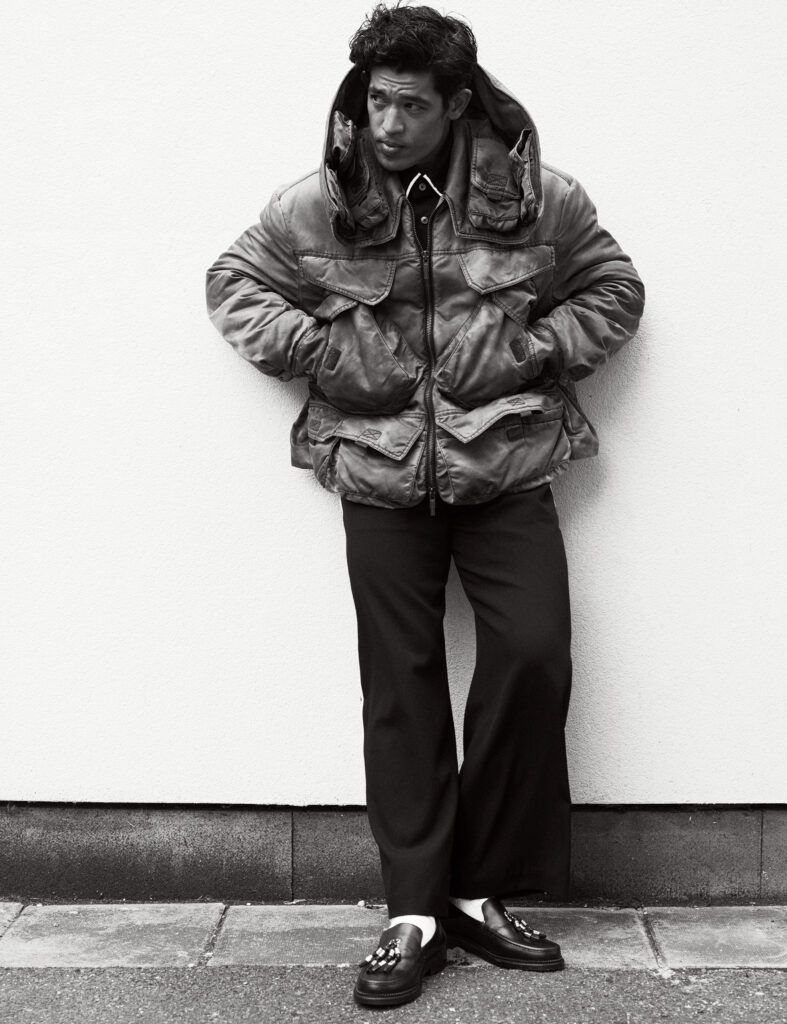
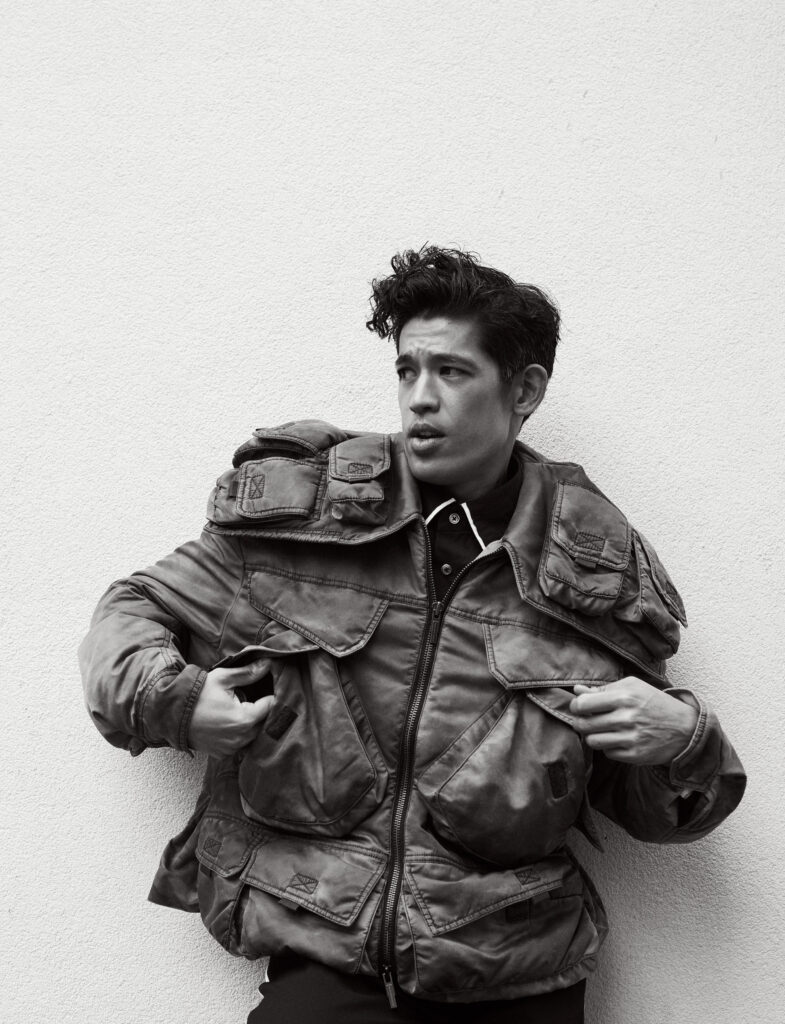
Puffer Coat, Shirt, & Trousers: Feng Chen Wang, Loafers: Toga
Puffer Coat, Shirt, & Trousers: Feng Chen Wang, Loafers: Toga
Who are some directors you’d like to collaborate with in the future?
I’d love to work with Chloé Zhao because she finds poetry in ordinary moments and elevates landscape, character, and atmosphere simultaneously. Celine Song is another—Past Lives showed how she can handle intimacy, longing, and the quiet spaces between words with such delicacy, which would be incredible to explore as an actor.
On a different vector, Denis Villeneuve—not for spectacle per se, but to see how he molds emotional stakes within expansive worlds. Ang Lee as well, because his work balances sensitivity with scope; he’s able to move seamlessly between the personal and the epic, and always roots spectacle in something deeply human. And locally, British directors like Steve McQueen (who’s already in my orbit through Blitz)—he has this ability to interrogate history, identity, and aesthetics in the same breath. I’d love to work with him again.
Finally, what are you most excited for viewers to see in Season Five of Slow Horses?
What excites me most is that Roddy is less peripheral this season: his choices, his contradictions, his heartbreaks begin to ripple outward in a way that forces him (and others) to respond. He’s no longer just the sarcastic foil or tech support; he becomes a pivot in the plot’s machinery.
We’ll also see more of his vulnerabilities through romantic tensions, awkwardness, and self-doubt, while still keeping his ego intact. I can’t wait for viewers to see how his arc collides with those of Lamb, Taverner, and the ensemble. There’s a moment in episode 3 where your perception of Roddy might stall—or even flip—and I think that’s where the season takes its emotional weight.
Also, the tonal swings are wonderfully jarring: Slow Horses is funnier in unexpected places this season and darker in unexpected places. That tension between absurdity and real stakes is what I hope people lean into and are surprised by.